
POLICY & GOVERNANCE
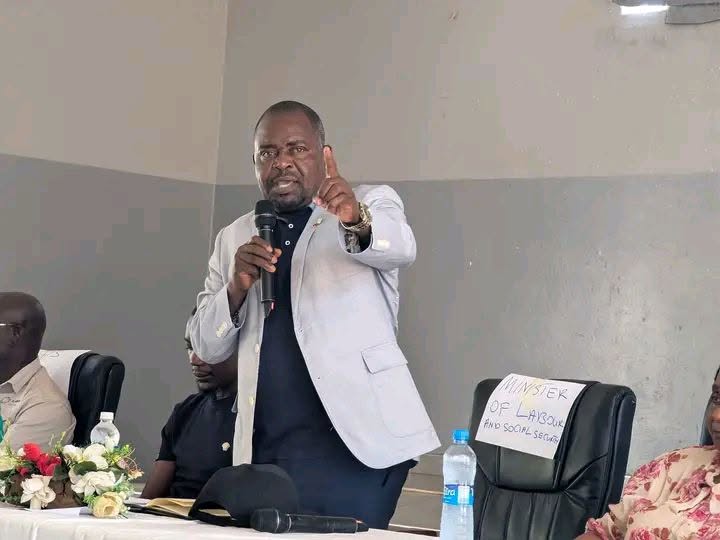
Nyambose urges emoluments commission to clarify role in civil servants’ pay negotiations
Minister of Labour and Social Security Misheck Nyambose has urged the Emoluments Commission to clearly explain its mandate to trade unions to avoid misunderstandings over its role in determining civil servants’ salaries and conditions of service.
Mr Nyambose said the Commission needed to engage trade unions and clarify that its mandate did not undermine their collective bargaining rights as representatives of public service workers.
He said the Commission’s responsibilities should not be interpreted as taking over the traditional role of unions in negotiating salaries and conditions of service for their members, as protected under International Labour Organisation (ILO) Convention No. 98.
The Minister was speaking when Emoluments Commission Director General Chembo Mbula paid a courtesy call on him.
Mr Nyambose called on the Commission to strengthen engagement with trade unions and explain its role in determining and harmonising emoluments in the public and quasi-government sectors to promote understanding and prevent unnecessary disputes.
He explained that the Commission was established to determine, harmonise and rationalise salaries, allowances and conditions of service across the public sector, particularly in addressing significant disparities in remuneration among government-funded institutions.
“The commission holds the ultimate authority to set the parameters for public spending on wages and sees to it that the national wage bill remains financially sustainable,” he said.
His remarks come against the background of concerns raised by trade unions, which have questioned whether the Commission’s involvement in determining public sector remuneration could undermine their collective bargaining responsibilities.
The Minister also challenged the Commission to strengthen oversight of employers’ compliance with statutory obligations, particularly the timely remittance of workers’ pension contributions to pension schemes.
He stressed that pension deductions made from employees’ salaries must be remitted within the stipulated time, warning that delays or failure to remit the contributions threatened workers’ financial security after retirement.
Mr Nyambose said it was unacceptable for employees to contribute towards their retirement throughout their working lives only to discover, upon retirement or when seeking to access their benefits, that the money deducted from their salaries had not been remitted.
He cited experiences during the introduction of the National Pension Scheme Authority (NAPSA) 20 per cent partial withdrawal in 2023, when some employees discovered that their employers had failed to remit contributions, affecting their ability to access the pre-retirement benefits.
He urged the Commission to actively monitor employers’ compliance with pension obligations and alert relevant authorities whenever irregularities were identified.
Mr Nyambose emphasised that protecting workers extended beyond their current salaries and conditions of service to safeguarding their future financial security.
He said pension contributions were workers’ entitlements and not money employers could retain or use at their discretion.
Previous article
Human behaviour key to successful imple…
Next article
ZAAA Names Eight Athletes For Maputo Yo…
No comments yet. Be the first to comment!